
Forged vs Cast Wheels: What Is the Difference?
Forged, cast and flow formed wheels compared: how each is made, what it means for strength, weight, design and cost, and which suits your use.
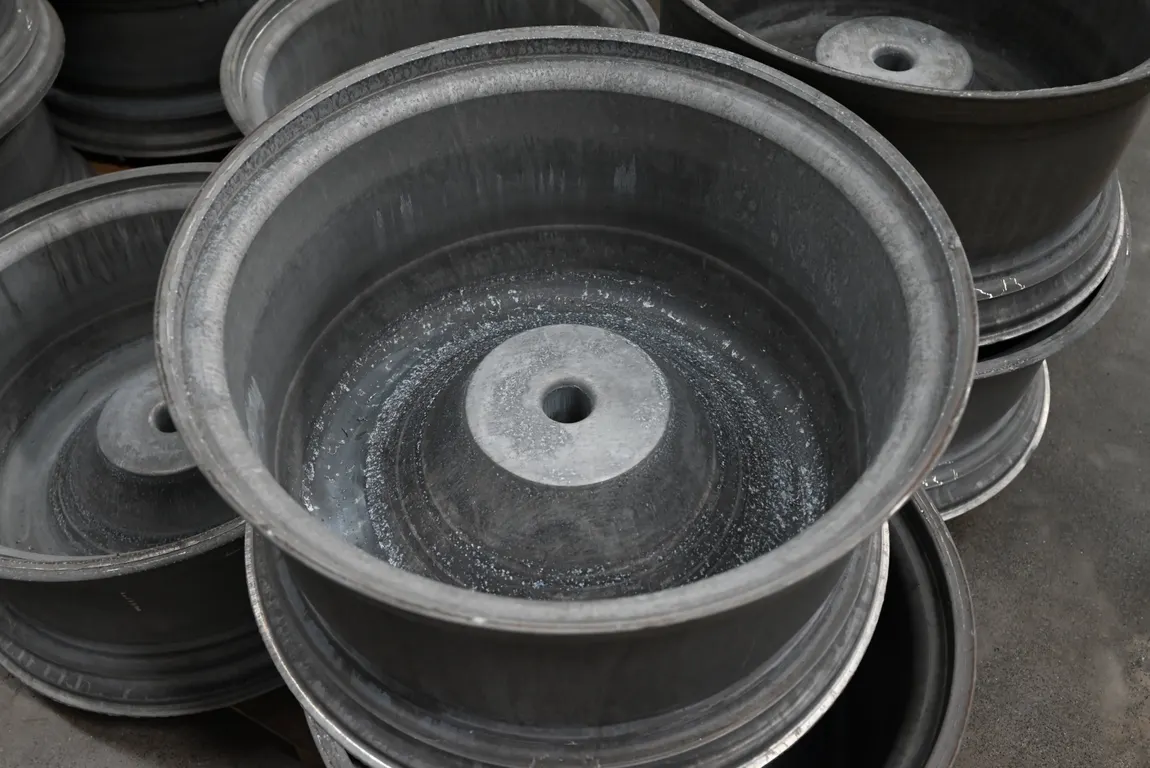
The difference is how the aluminum gets its shape. Cast wheels are made by pouring molten aluminum into a mold. Forged wheels are made by pressing solid aluminum under high pressure, then machining it to the final design.
How each type is made
- Cast: molten alloy fills a mold by gravity or low pressure, cools, and is machined and finished.
- Flow formed: a cast wheel whose barrel is heated and rolled under pressure, which thins and strengthens that area. The spokes are still cast.
- Forged: solid aluminum is pressed into a blank, then CNC machines cut the spokes, rim profile and mounting face.
Comparison
| Cast | Flow formed | Forged | |
|---|---|---|---|
| Shape formed by | Pouring | Pouring plus rolling the barrel | Pressing plus machining |
| Metal structure | Can contain porosity | Denser barrel | Dense, with grain flow from pressing |
| Weight for similar strength | Usually highest | Usually in between | Usually lowest |
| Custom sizes and designs | Limited by molds | Limited by molds | Flexible through CNC machining |
| Cost | Usually lowest | Usually in between | Usually highest |
These are general tendencies. A specific wheel depends on its alloy, design, load rating and quality control, so compare real weights and test ratings.
Are forged wheels lighter and stronger?
Forging produces a denser structure, so a forged wheel can use less material to carry the same load. A forged wheel is not automatically lighter, though: a wide or thick design can weigh more than a small cast wheel.
Which should you choose?
- Everyday replacement on a budget: a quality cast wheel with the right load rating is often enough.
- Moderate weight saving: flow formed is a middle option.
- Custom sizing, high loads, performance or premium projects: forged gives the most freedom in size, offset and design.
Whatever you choose, check the load rating and that the offset and bolt pattern match your vehicle.
How OKSTX wheels are made
OKSTX starts from forged blanks, then CNC machines, finishes and tests the wheels with bending fatigue and impact testers. See the manufacturing process or browse forged wheel designs.